
Aircraft Upholstery
Aircraft Upholstery in Edmonton
An aircraft interior is judged by different rules than any other seating Harvest Moon Upholstery touches. It is not just wear that matters — it is weight, heat cycling between a hot ramp and a cold cruise altitude, constant UV through the windows, and, for anything beyond a simple recover, the flame-resistance standard the material has to meet before it ever goes back in the airframe. A seat cover that would be perfectly fine in a car can be the wrong choice entirely in a cockpit.
Glenn Sheets has been upholstering since he was eighteen, starting with contract work for the military before opening his own shop at twenty-five and building experience across roughly ten different upholstery operations over the years that followed. Aircraft work has been part of that range alongside automobiles, boats, and motorhomes. Harvest Moon Upholstery brings that same attention to specification to every aircraft interior it recovers.

Why Aviation Materials Are Different
Using automotive or furniture-grade material on an aircraft may look identical on the day it’s installed, but it is specified for the wrong environment entirely.
Standard vinyl or leather is not rated for burn-through resistance, which matters more in a cabin than almost anywhere else it’s used. Ordinary foam can feed a fire instead of slowing it, where fire-blocking foam is built specifically to resist burn-through. And ordinary thread and backing weaken under the heat cycling and UV an aircraft sees on every flight, long before the cover itself looks worn.
Built for Altitude and Airworthiness
What goes into an aircraft seat at Harvest Moon Upholstery, and why each choice is made:
| Component | What we use | Why it matters |
| Cover material | Flame-resistant leather or aviation-grade fabric | Meets the burn behaviour your interior needs to hold up to inspection |
| Foam | Fire-blocking foam layer | Slows burn-through rather than feeding it; standard for cabin seating |
| Thread | High-temperature, UV-resistant thread | Seams that don’t let go under vibration, heat cycling, or window UV |
| Construction | Weight-conscious stitching and panel layout | Every added ounce matters on an aircraft in a way it never does in a car |
| Backing | Fire-retardant scrim backing | Adds a second layer of burn resistance behind the visible cover |
None of this is exotic — it is the correct specification for an aircraft interior, matched to what your airframe’s documentation and your inspector expect to see.
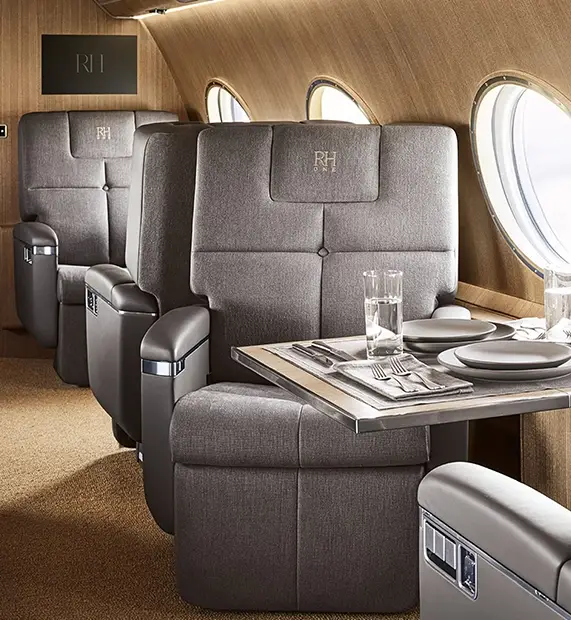
Cockpit vs Cabin Seating
Not every seat in an aircraft carries the same requirements, and specifying them identically is either overspending or cutting a corner that shouldn’t be cut.
Cockpit and crew seating takes the most direct sun, the most vibration, and the most day-to-day use, so flame-resistant material, high-temperature thread, and weight-conscious construction all matter most here.
Cabin and passenger seating still needs to meet the same flame-resistance standard on most aircraft, but has more room for comfort and finish choices once that requirement is met — which is where a private aircraft’s interior can genuinely look and feel custom rather than purely functional.
What We Recover On Board
Pilot and co-pilot seats
Passenger and bench seating
Cabin divans and club seating — private and charter aircraft
Sidewall panels and armrests
Headliners — recovered to match the seating
Cushion and foam replacement where padding has compressed or degraded [link: Foam & Cushion Replacement]
Split seams and worn panels — repaired where the surrounding material is still sound
Certification and Documentation
Aircraft interior work needs to respect your aircraft’s certification basis, not just look right. Tell us your aircraft type, interior classification, and what your logbook or inspector requires, and materials are sourced and specified against that requirement before anything is ordered — including flame-resistance documentation where your aircraft calls for it.
Timing Around Your Maintenance Schedule
Aircraft interior work fits best around time the aircraft is already down, not around a season.
Annual or scheduled maintenance — the natural window
If the aircraft is already out of service for inspection, interior work can run alongside it without costing any additional downtime.
Planned ahead of a sale or charter season
A worn interior affects resale value and charter appeal more than almost any other single factor. Booking ahead of a listing or a busy season means the work is finished, not in progress, when it matters most.
Reactive repairs
A split seam or a failed seat doesn’t have to wait for a maintenance window — it can be scheduled on its own, sized to the actual repair needed.
Before We Start
Send photos and aircraft details.
The seating, the damage close up, and the aircraft's make, model, and interior classification.
Get a clear quote.
Materials, labor, and timing, agreed before work begins — including which components must meet flame-resistance requirements.
We handle the work at the agreed location.
Hangar or airport, with the setup and access confirmed before the job begins.
Why Aircraft Work Is Its Own Trade
Aircraft upholstery punishes the same shortcuts as marine work, plus one an aircraft can’t tolerate at all: the wrong material in a cabin isn’t just a comfort or durability problem, it’s a compliance one.
Glenn Sheets has been upholstering since eighteen, with aircraft work part of the range he built across roughly ten Edmonton-area shops before running his own. Harvest Moon Upholstery specifies aircraft materials as carefully as it stitches them, and will tell you honestly when a repair will hold and when a full recover is the only thing that actually resolves the problem.
Aircraft We Commonly Work On
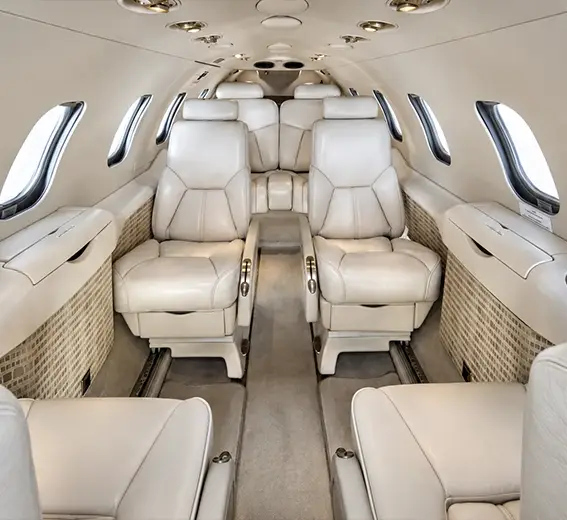
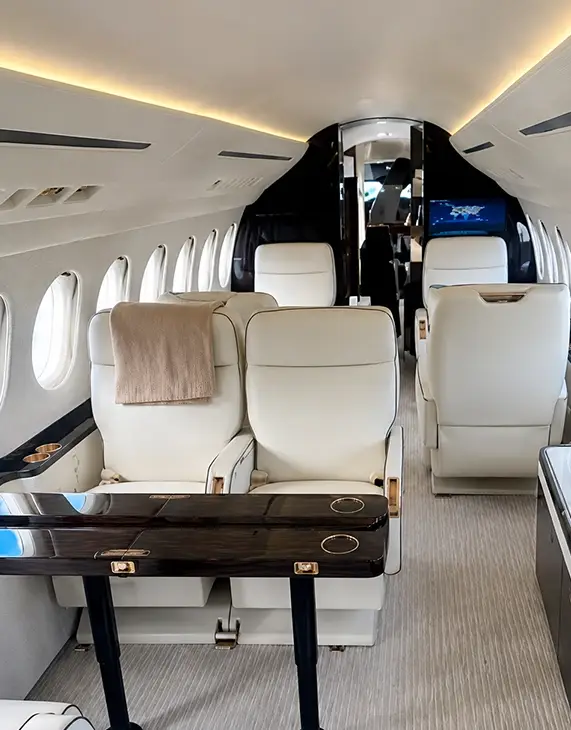
Every aircraft interior is different. Seat design, cabin layout, materials, and documentation requirements can vary widely depending on the aircraft, which is why every project begins with a discussion about the aircraft itself rather than simply the upholstery. Glenn reviews the seating, interior condition, and intended use before recommending the most appropriate repair or recover.
Harvest Moon Upholstery works on a variety of aircraft interior components, including:
- Pilot and co-pilot seating
- Passenger seating
- Cabin benches and club seating
- Sidewall and interior trim panels
- Armrests and padded cabin components
- Headliners
- Seat cushion and foam replacement
- Complete interior recover projects
Pricing an Aircraft Interior
Aircraft work is quoted per project, because no two interiors are laid out or classified the same way. What moves the number is how many seats and panels are involved, whether foam is being replaced along with covers, the flame-resistance grade required, and access at the aircraft’s location.
Recovering existing seating is typically far less expensive than sourcing new certified seat assemblies, and it measurably improves both cabin appearance and resale value.
Send photos of your aircraft seating for a free quote — (780) 690-1747. For other specialty seating, explore our Auto Upholstery and Boat & Marine Upholstery services.
Frequently Asked Questions
Yes. Materials are sourced and specified to meet the flame-resistance requirement your aircraft and interior classification call for, confirmed with you before ordering.
We match as closely as available aviation-grade materials allow, and show you real options first rather than a swatch that only looks right on screen.
Work is done on-site at the aircraft's hangar or airport location, with access and setup agreed before the job starts.
Often, yes — if the surrounding material is still sound and matches closely enough. Where the rest of the cabin is already faded or worn, we'll say so honestly rather than leave a mismatched patch.
It depends on seat count, panel scope, and whether foam is being replaced. You get a schedule with the quote, ideally timed to a maintenance window you already have.
Almost always, and it avoids the lead time on new certified seat assemblies. Recovering keeps the seat structure and renews everything the passenger or pilot actually touches. Get your aircraft interior sorted around your own schedule. Call Harvest Moon Upholstery at (780) 690-1747 or send photos for a free quote.
Get a Free Upholstery Quote
Call Harvest Moon Upholstery at (780) 690-1747 or send photos of your project to get started.