
Boat & Marine Upholstery
Boat & Marine Upholstery in Edmonton
Boat seating does not wear out. It breaks down. Household furniture gets tired slowly and predictably; marine seating is attacked from several directions at once — ultraviolet light from above, water from every direction, and then months of cold storage that finishes what the summer started. That is why a boat interior can look acceptable in September and split open in May.
Harvest Moon Upholstery recovers boat seats and cushions using materials specified for that environment rather than borrowed from the furniture trade. Glenn Sheets has been an upholsterer since he was 18, and marine work was one of the specialties he took on during years of contract work across roughly ten Edmonton shops. Done properly, with the right vinyl, the right foam, and the right thread, a marine interior lasts seasons instead of months.
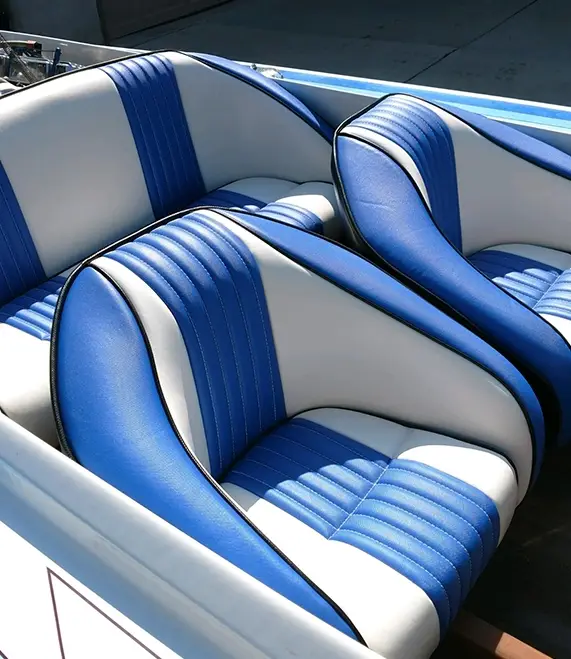
Marine Materials Matter
Using furniture materials on a boat may lower the quote, but they often fail after a season or two.
Vinyl can crack and fade
Standard vinyl is not made for constant sun. Marine-grade vinyl resists UV damage and stays flexible longer.
Thread can fail early
Ordinary polyester thread weakens in sunlight, even when the vinyl still looks fine. Marine upholstery needs UV-resistant thread as a basic standard.
Foam can hold water
Household foam absorbs moisture and stays damp, which causes odor and mildew. Closed-cell or quick-dry foam sheds water and dries faster.
EXPERT TIP — If your boat seats smell musty but the covers look fine, the problem is waterlogged foam inside, not the vinyl. Replacing the foam removes the smell at its source — surface cleaning only masks it for a week.
Built for Sun and Water
What goes into a marine job at Harvest Moon Upholstery, and why each choice is made:
Component | What we use | Why it matters |
Cover material | Marine-grade vinyl — UV-stabilized, mildew-resistant | Stays flexible under sun; resists chalking and cracking |
Thread | UV-resistant marine thread | Seams outlast the season instead of failing first |
Foam | Closed-cell or quick-dry foam | Sheds water rather than holding it; no trapped moisture |
Construction | Drainage and ventilation detailing | Water leaves the cushion instead of sitting in it |
Backing | Mildew-resistant materials throughout | Slows the growth that ruins cushions in storage |
None of this is exotic. It is simply the correct specification for a boat, and it is the difference between seating that is still good in five years and seating that needs redoing next spring.
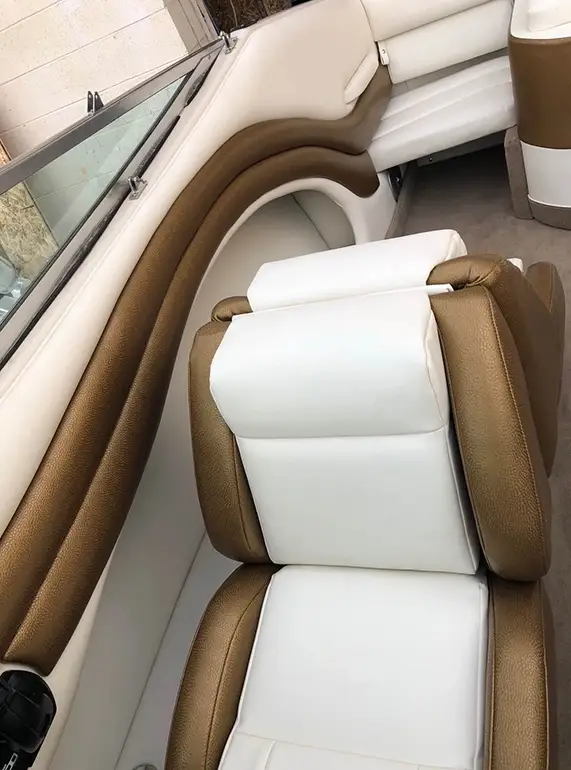
Interior vs Exterior Cushions
Not every cushion on a boat faces the same life, and specifying them identically is a waste in one direction and a false economy in the other.
Exterior seating — helm seats, bench seating, sun pads, and anything on an open deck — takes the full load of sun, spray, and rain. This is where marine-grade vinyl, UV thread, and quick-dry foam are non-negotiable, because everything about the environment is working against the material.
Interior and cabin seating — sheltered from direct sun and rain — has an easier life, but it is not a living room. Humidity, condensation, and long closed-up storage still cause mildew, so materials still need to be moisture-tolerant even though the UV demand is lower. That means comfort and appearance can be weighted more heavily than they can on deck.
Glenn will walk through which cushions sit in which category on your boat, so money goes into the specification where it earns its keep.
What We Recover On Board
Helm and captain’s seats
the seats that take the sun all day
Bench and lounge seating
including full pontoon interiors
Sun pads and casting decks
Cabin and interior seating
dinettes and berths
Jump seats and rear bench seating
Cushion replacement
new foam and covers where the old ones are waterlogged
Split seams and cracked panels
repaired where surrounding vinyl is still sound
Storage Covers and Off-Season Damage
Not every cushion on a boat faces the same life, and specifying them identically is a waste in one direction and a false economy in the other.
Exterior seating — helm seats, bench seating, sun pads, and anything on an open deck — takes the full load of sun, spray, and rain. This is where marine-grade vinyl, UV thread, and quick-dry foam are non-negotiable, because everything about the environment is working against the material.
Interior and cabin seating — sheltered from direct sun and rain — has an easier life, but it is not a living room. Humidity, condensation, and long closed-up storage still cause mildew, so materials still need to be moisture-tolerant even though the UV demand is lower. That means comfort and appearance can be weighted more heavily than they can on deck.
Glenn will walk through which cushions sit in which category on your boat, so money goes into the specification where it earns its keep.
Before Boating Season Starts
Marine work is seasonal in a way no other upholstery is, and timing genuinely changes what you pay and when you get the boat back.
Late winter — the right time
This is when to book. The boat is already accessible in storage, there is time to order materials, and nothing is competing for the calendar. Work booked now is finished before anyone is thinking about the water.
Early spring — still workable, getting busy
Every boat owner in Edmonton has the same idea at the same time. Work is still very doable, but scheduling tightens quickly and material lead times matter more.
Peak season — you lose weekends
Repairs during the season mean the boat is out of use in the few months it is actually usable. Short repairs are fine; a full recover in July is a bad trade.
Haul-out — the smartest inspection point
When the boat comes out, that is the moment to check seams, press the cushions for dampness, and note anything cracking. Small problems found at haul-out are cheap repairs in February and expensive rebuilds in June.
Before We Start
Send photos and boat details.
The seating, the damage close up, and the boat’s make and model. Mention anything that smells damp — that tells us the foam needs attention, not just the covers.
Get a clear quote
Materials, labor, and timing, agreed before work begins — including which cushions genuinely need marine-grade specification and which do not.
We handle the work.
We handle the work at the agreed location, with the setup confirmed before the job begins.
Early spring — still workable, getting busy
Marine work is seasonal in a way no other upholstery is, and timing genuinely changes what you pay and when you get the boat back.
This is when to book. The boat is already accessible in storage, there is time to order materials, and nothing is competing for the calendar. Work booked now is finished before anyone is thinking about the water.
Every boat owner in Edmonton has the same idea at the same time. Work is still very doable, but scheduling tightens quickly and material lead times matter more.
Repairs during the season mean the boat is out of use in the few months it is actually usable. Short repairs are fine; a full recover in July is a bad trade.
When the boat comes out, that is the moment to check seams, press the cushions for dampness, and note anything cracking. Small problems found at haul-out are cheap repairs in February and expensive rebuilds in June.
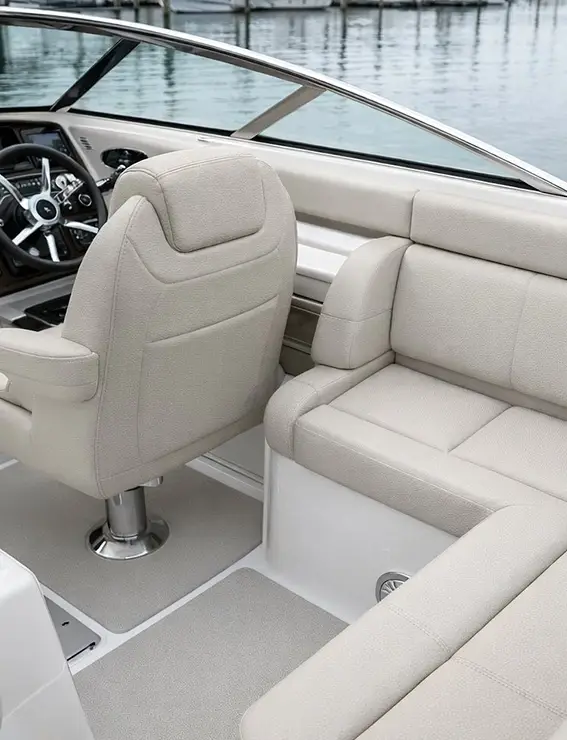
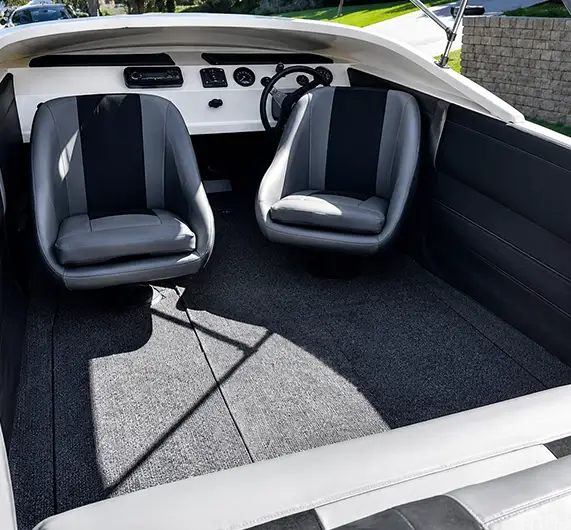
Why Marine Work Is Its Own Trade
Marine upholstery punishes shortcuts more reliably than any other kind, because the environment tests every decision continuously. A seam that would last a decade indoors fails in two summers outdoors if the thread was wrong.
Glenn Sheets has been an upholsterer since he was 18, and marine work was among the specialties he picked up across roughly ten Edmonton shops — which is where knowledge like this comes from rather than a supplier catalog. Harvest Moon Upholstery specifies the materials as carefully as it stitches them, and will tell you honestly when a repair will hold and when recovering is the only thing that will actually last.
Pricing a Boat Interior
Marine work is quoted per project, because no two boats are laid out the same way. What moves the number is how many seats and cushions are involved, their size and shape, whether foam is being replaced as well as covers, and the grade of vinyl selected.
Recovering existing seating remains far less expensive than replacing marine seats outright, and it noticeably lifts what the boat is worth when it sells.
Book ahead of the season. Send photos of your boat seating for a free quote — (780) 690-1747. For other specialty seating projects, explore our Auto Upholstery and RV & Motorhome Upholstery services.
Frequently Asked Questions
Almost always because non-marine vinyl was used. Without UV stabilization, vinyl chalks and cracks quickly under direct sun. Marine-grade vinyl is formulated specifically to resist that, which is why it lasts several times longer in the same conditions.
The covers usually can. The foam usually cannot, because household foam absorbs water and holds it against the vinyl. Replacing it with closed-cell or quick-dry foam removes the smell at its source rather than covering it.
Late winter or early spring, before the season starts. Every boat owner wants work done at the same time, so booking early means the boat is ready when the weather is — and you are not losing summer weekends to it.
Yes. Pontoon bench and lounge seating is common work, and doing the whole boat together gives a consistent finish rather than a patchwork of shades.
Often, yes — if the surrounding vinyl is still sound. Where the rest of the material is already chalking or brittle, a single repair tends to highlight the age of everything around it, and we will say so honestly.
We match as closely as available marine-grade materials allow and show you realistic options first. On a faded interior, recovering adjacent panels together usually looks far better than matching new material to sun-bleached old material. Get the boat ready before the water is. Call Harvest Moon Upholstery at (780) 690-1747 or send photos for a free quote.
Get a Free Quote
Call Harvest Moon Upholstery at (780) 690-1747 or send photos of your project to get started.