
RV & Motorhome Upholstery
RV & Motorhome Upholstery in Edmonton
An RV interior lives a strange double life. For a few months it’s a home — slept in, eaten in, sat in for hours at a time. For the rest of the year it sits in a lot or a driveway, unheated, swinging from summer heat to deep winter cold with nobody inside to notice what that does to it.
Harvest Moon Upholstery recovers RV, motorhome, and trailer interiors across Edmonton. Glenn Sheets has been an upholsterer since he was 18, and rigs suit that experience well: almost nothing inside them is a standard size, the spaces are tight, and the seating has to do more than one job. Recovering the interior is also one of the few upgrades that changes how a rig feels everywhere at once — for a fraction of what trading up would cost.

Life on the Road Wears Furniture Differently
Household furniture wears from steady, moderate use. RV furniture wears from bursts of intense use separated by long periods of neglect, and both halves cause damage.
Concentrated use. A dinette sat at for three meals a day for two straight weeks racks up wear a kitchen bench takes a year to accumulate. Bunk and sofa cushions get slept on, which is a completely different load than sitting.
Motion. Everything in a rig is moving down a highway. Seams work, cushions shift and rub against edges, and fasteners loosen — wear stationary furniture never experiences.
Storage extremes. An Alberta rig can sit near freezing for months, then bake in summer sun. That cycle stiffens vinyl, dries out fabric, and finds every weak seam. Add condensation in a closed-up rig and cushions come out of storage damp and musty.
Built to a weight and a price. Factory RV furniture is specified to keep dry weight and build cost down. It's rarely built to last a decade, which is why so many rigs have sound structure and tired seating.
Dinettes, Captain's Chairs & Sleeping Areas
Each zone in a rig fails in its own way, and each needs a different answer.
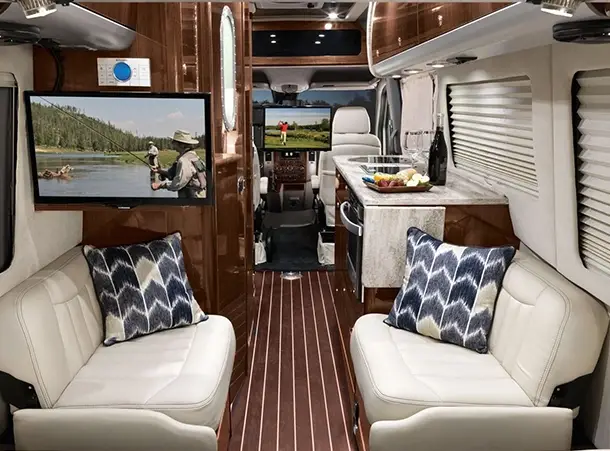
The dinette
The most-used and most-complained-about seating in almost every rig. Factory dinette cushions are typically thin and soft, so they flatten fast and leave you sitting on a plywood base through a two-inch pad. Rebuilding them with proper high-density foam is the single highest-impact change most owners can make — often more noticeable than new fabric. Where the dinette converts to a bed, the foam has to work for sitting upright and lying flat, which is a genuine balancing act rather than a catalog choice. (link → Foam & Cushion Replacement)

Captain's and cab seats
These wear like vehicle seats, because that’s what they are — the outer bolster goes first from climbing in and out, then the seams open along the edge. Caught early they can usually be repaired rather than fully recovered.
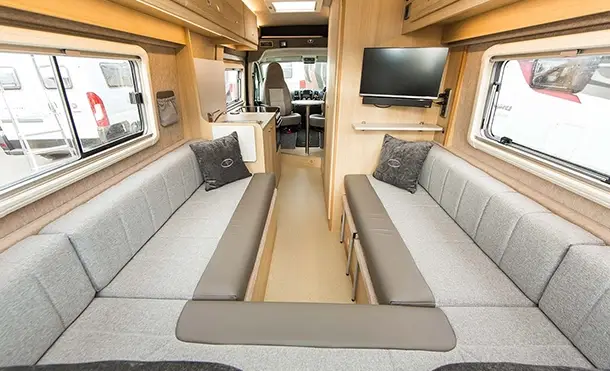
Sofas, jackknifes, and lounge seating
These do double duty as beds, so the foam is asked to be supportive when upright and comfortable when flat. Factory versions rarely manage either well. Rebuilding them transforms how usable the living area is on a long trip.
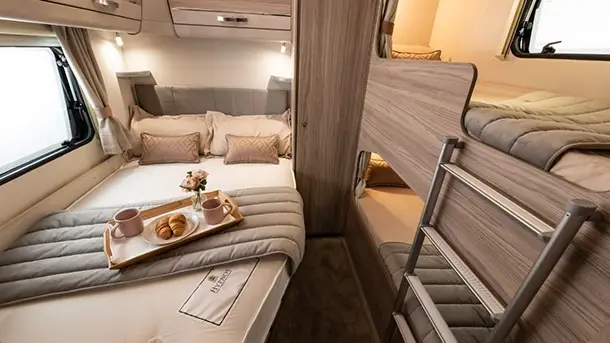
Bunks and sleeping areas
Bunk mattresses and sleeping cushions are usually the thinnest, cheapest foam in the whole rig. Replacing them makes the biggest difference to anyone actually sleeping on them — and it’s normally the least expensive zone to fix.

Booths, benches, and storage-base seating
Seating built over storage compartments has to be recovered without losing access to what’s underneath. Straightforward when the person doing it has done it before; frustrating when they haven’t.
Why Factory Dinette Cushions Disappoint
This deserves its own explanation, because it’s the complaint we hear more than any other — and owners often assume they’re stuck with it.
Manufacturers specify dinette cushions to hit a price point and a weight target. That usually means a thin slab of low-density foam in a fitted cover: fine on the showroom floor, uncomfortable after two weeks of real use, and permanently flattened within a season or two. It isn’t that the cushions failed; they were never built to do more.
The fix isn’t thicker foam alone, which just raises your seat height and makes the table sit wrong. It’s the correct density for the depth available, so support comes from the foam resisting compression rather than from sheer bulk. Glenn works out what will fit the space and still support properly, then builds to that.
EXPERT TIP — Before assuming you need a whole new dinette, sit on it and press down hard with your palm. If your hand reaches the base easily, the foam is the problem — not the layout, and not the rig.
Lightweight, Durable Materials for RVs
Material choice in a rig balances three things that pull against each other: durability, comfort for long sitting, and weight.
High-density foam — the fix for thin, flat dinette, bunk, and sofa cushions. Supports properly without excessive depth.
Durable woven fabrics — comfortable for hours of sitting, breathable in heat, hard-wearing under concentrated use.
Vinyl — wipe-clean and practical for dinettes, families, and anywhere food happens. Sensible for the eating zone even if fabric is used elsewhere.
Fade-resistant options — worth it beside a large window or skylight.
Moisture-tolerant specification — sensible in a rig that sits closed up through an Alberta winter.
Weight matters more than people expect. Every pound added to the interior is a pound off your cargo capacity, which is why heavy household-style materials are the wrong answer even when they feel luxurious in a showroom.
Recover Instead of Replace
RV furniture is fixed into the rig, sized to the space, and expensive to buy new — when a direct replacement is even available, which for an older rig it often isn't. Meanwhile the structure underneath is usually perfectly sound; it's the foam and fabric that have aged.
Recovering keeps the fit designed for the space, costs a fraction of new furniture, and lets you choose materials that suit how you actually use the rig rather than what the factory picked to hit a price. For anyone keeping a rig rather than trading it, it's comfortably the strongest value upgrade available — and unlike most upgrades, you feel it every single day of every trip.
Getting Your RV Ready
A little preparation makes quoting far quicker and more accurate. Before you get in touch:
Then it’s simple:
Send the photos and measurements. With the details above, we can quote accurately rather than approximately.
Get a clear quote. Foam, fabric, labor, and timing agreed before work begins — including which zones are worth doing now and which can wait.
We handle the work. The work setup, access, and timing are agreed before the project begins.
Photograph each cushion from directly above, square on rather than at an angle
Measure length, width, and thickness of each cushion; note any that aren't rectangular
Count how many cushions and seats you want done, zone by zone
Photograph the seating in place, so we can see how it fits the space
Note anything that converts to a bed — it changes the foam specification
Note anything that smells damp or feels heavy — that points to moisture in the foam
Have the rig's make, model, and year handy
Questions RV Owners Ask
Yes, and it's the most common request we get. Factory dinette cushions are usually thin, low-density foam built to a price. Rebuilding them with high-density foam at the right thickness makes the dinette genuinely usable for meals and sitting, without raising the seat so high that the table no longer works.
Yes. Almost nothing in a rig is a standard size, so cushions are templated and built to fit your rig specifically. That's normal work here rather than an obstacle.
Yes. Cab and captain's seats wear at the bolsters and seams first, much like vehicle seats. Caught early they can often be repaired rather than fully recovered.
If the rig is mechanically sound and you plan to keep it, it's one of the highest-impact upgrades available and far cheaper than trading up. The structure usually long outlasts the foam and fabric.
It depends on the zone. Vinyl wipes clean and suits dinettes and families; durable woven fabric is more comfortable for long sitting in the lounge area. Fade-resistant options are worth it beside big windows, and weight is worth considering everywhere.
Absolutely, and many owners do. Starting with the dinette gives the biggest improvement for the smallest spend, and we can match materials later so the rig still looks coordinated when the rest is done.
Get a Free Upholstery Quote
Call Harvest Moon Upholstery at (780) 690-1747 or send photos of your project to get started.