Not every damaged piece of furniture needs the same type of work. A torn cushion, a broken frame, and faded wood might all seem like “furniture damage,” but each requires a different solution.
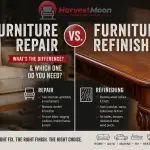
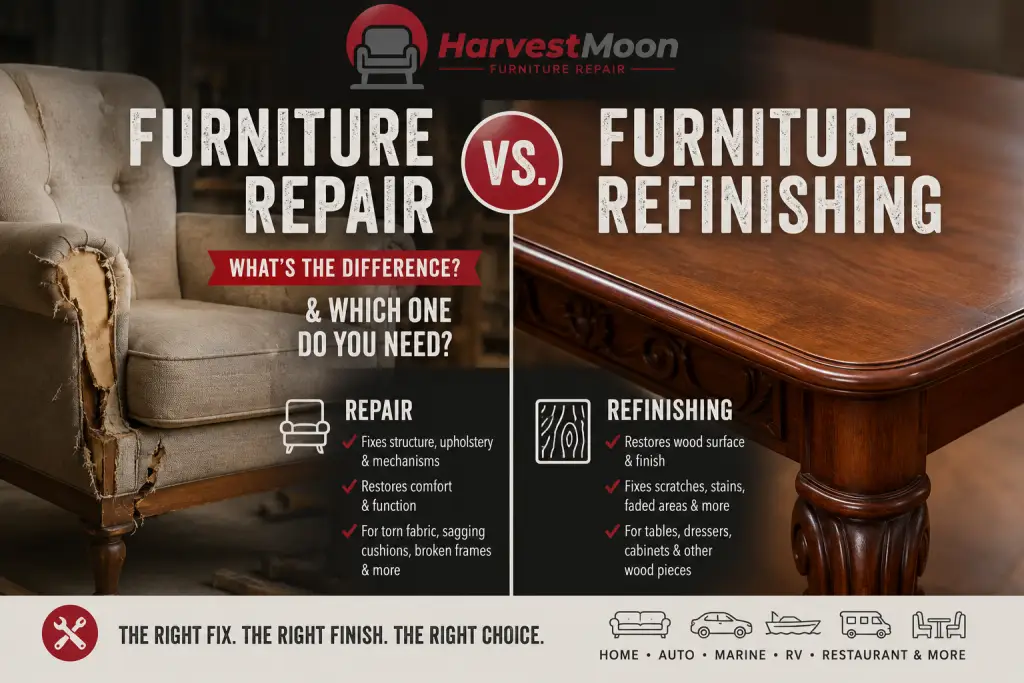
Furniture repair and furniture refinishing are often mistaken for the same service, but they address different problems. Repair focuses on restoring a piece’s structure, comfort, and function, while refinishing restores the appearance of wood surfaces.
Understanding the difference helps you choose the right service, avoid unnecessary work, and make better decisions about restoring your furniture. This guide explains what each service covers, when it’s needed, and how to tell which one is right for your piece.
Here’s how to tell which one your furniture actually needs, before you book anything.
Furniture Repair vs. Furniture Refinishing at a Glance
| Furniture Repair | Furniture Refinishing | |
| Fixes | Structure, upholstery, mechanisms | Wood surface & finish |
| Typical problems | Broken frame, sagging cushions, torn fabric, worn springs, sticking recliners | Scratches, faded stain, water rings, chipped varnish |
| Materials involved | Fabric, foam, springs, wood joints, hardware | Stain, varnish, lacquer, wood filler |
| Common on | Sofas, chairs, beds, dining sets, auto/marine/RV seating | Tables, dressers, cabinets, wood chairs |
| Skillset | Upholstery & structural woodworking | Wood finishing & staining |
What Furniture Repair Actually Covers
Furniture repair deals with anything affecting how a piece functions or feels — not how the wood looks. If you’re sitting on it, sleeping on it, or the frame is doing the work, it’s a repair job. That includes:
- Frame repair — loose, cracked, or broken joints causing wobble or sagging
- Reupholstery — replacing worn, torn, or outdated fabric
- Cushion & foam replacement — restoring support to flattened or sunken cushions
- Spring repair — fixing sofas and chairs that have started to sag or bottom out
- Seam and rip repair — patching torn upholstery before the damage spreads
- Mechanism repair — recliners, sofa beds, and reclining chairs that stick or won’t latch
- Specialty upholstery — automotive, marine, RV, restaurant, and even aircraft seating, which uses the same core repair skills as home furniture
A good rule of thumb: if you’d describe the problem by touching or sitting on the piece rather than looking at it, it’s a repair issue.
What Furniture Refinishing Actually Covers
Refinishing is entirely about the wood surface. It doesn’t touch upholstery, springs, or frame structure — it’s about stripping away the old finish and rebuilding it. That includes:
- Stripping old varnish, paint, or stain down to bare wood
- Sanding out scratches, water rings, and surface damage
- Re-staining to match or change the wood tone
- Applying new varnish, lacquer, or protective topcoat
- Touching up chips or worn spots on an otherwise solid finish
If the piece is solid wood, structurally sound, and just looks tired or faded, refinishing is the right call — not repair.
So Which One Does Your Furniture Need?
Ask these three questions:
- Is the problem how it looks, or how it works? Looks = refinishing. Works = repair.
- Is there fabric or upholstery involved? If yes, that’s repair territory — refinishing shops don’t typically touch fabric, foam, or springs.
- Is the frame solid, or does it wobble/creak/sag? A solid frame with worn fabric just needs reupholstery. A wobbly frame needs structural repair first, regardless of what the fabric looks like.
Some pieces genuinely need both — a wood-and-upholstery armchair with a faded wood arm and a torn seat cushion, for example. In that case, the repair work (fabric, cushion, frame) and the wood refinishing are two separate jobs, sometimes done by two different specialists, sometimes by one shop that handles both.
Repair or Refinish — Which Costs Less?
There’s no single answer here since it depends entirely on the size of the piece and extent of the damage, but as a general pattern:
- Spot repairs (a torn seam, a flattened cushion, a wobbly leg) are usually the most affordable fix and can often be done in a single visit.
- Full reupholstery costs more than a spot repair but is almost always cheaper than buying a comparable new piece — especially on well-built furniture.
- Refinishing pricing depends on the size of the surface and how much stripping/sanding is needed, not the complexity of the piece.
The only way to get an accurate number is a real quote against the actual piece — anyone quoting a firm price without seeing it is guessing.
A Note From Experience
Furniture repair is a hands-on trade — the kind of thing you learn by doing it across hundreds of different pieces, not from a manual. At Harvest Moon Upholstery, that experience spans decades and a wide range of upholstery work — home furniture, automotive interiors, marine and RV seating, restaurant booths, and more. That breadth matters here: it’s what makes it possible to look at a piece and tell you honestly whether it needs repair, refinishing, or both — instead of just selling you the one service the shop happens to offer.
FAQs
Can one shop do both repair and refinishing? Some can, but they’re genuinely different skillsets — upholstery and structural repair versus wood finishing. If a shop only lists one of the two as a specialty, ask before assuming they cover both.
Is it cheaper to repair furniture than replace it? In most cases, yes — especially for well-built pieces where only the fabric, foam, or a joint has failed. The frame is usually the most expensive part of a piece to reproduce, and if it’s still solid, you’re only paying to restore the parts that wore out.
My chair looks fine but feels different — is that repair or refinishing? That’s repair. A change in feel almost always points to worn foam, sagging springs, or a loosening frame — refinishing won’t affect any of that.
Does reupholstery ruin the original frame? No — reupholstery replaces the fabric and padding, not the frame. A skilled upholsterer works around the existing frame and often reinforces it in the process.
How do I know if my furniture is worth repairing at all? If the frame is solid — no major cracks, no structural failure — it’s almost always worth repairing. The frame is what determines a piece’s lifespan; fabric, foam, and finish are all replaceable.
Have a piece you’re not sure about? Send us a photo or description and we’ll tell you honestly whether it’s a repair job, a refinishing job, or both — no guesswork, no upsell. Get a free quote!